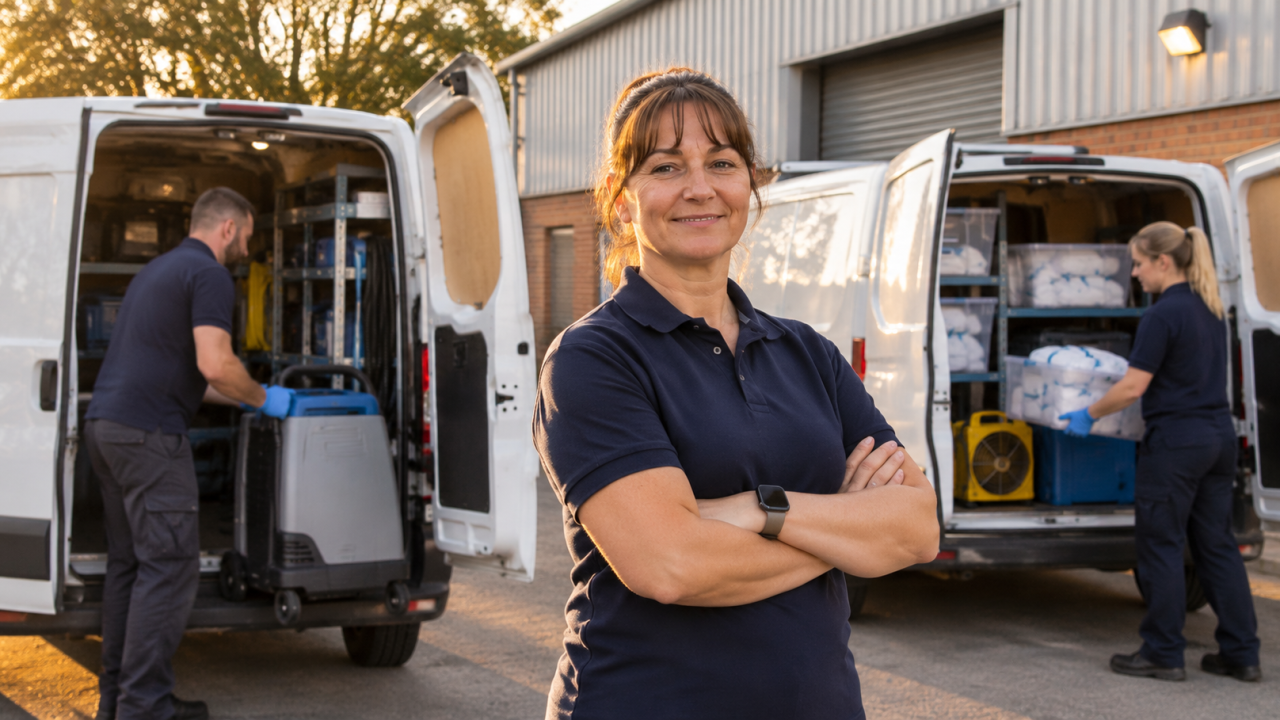
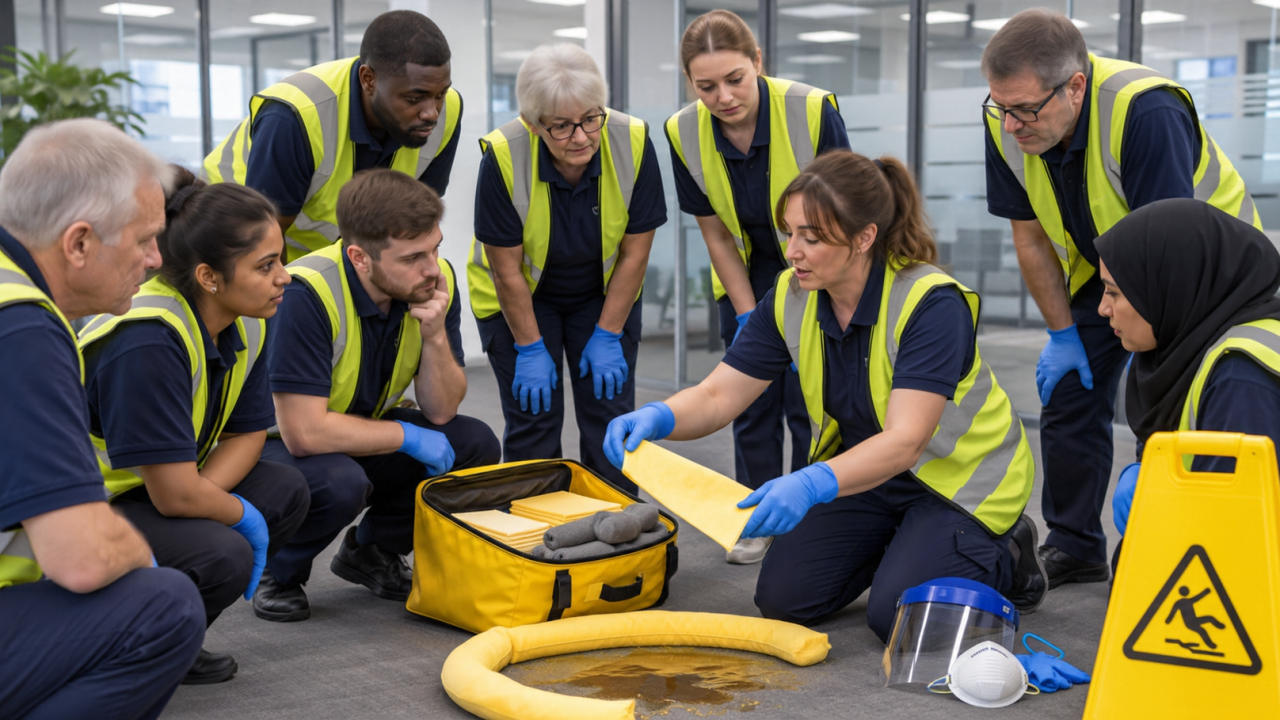
If your cleaning teams work in offices, schools, healthcare settings, transport hubs or public buildings, sooner or later they’ll deal with blood, bodily fluids, sharps or other hazardous materials.
The question isn’t whether it will happen. It’s whether you can show your people were trained and competent to deal with it safely when it does.
Here are five questions every facilities management and multi-site cleaning company should be able to answer with confidence.
1. Are your employees suitably trained?
Employers have a legal duty to protect staff from the risks they face at work, including biological agents under the COSHH Regulations. That means training that matches the tasks people actually do, not a generic induction module.
Ask yourself: if a cleaner on one of your sites had to deal with a blood spill or a used needle tomorrow, would they know exactly what to do?
2. Can they demonstrate competence?
A training record shows attendance. It doesn’t show ability. Clients, auditors and insurers increasingly want to see evidence that people can apply what they’ve learned, ideally through practical, observed assessment.
I explain the difference in biohazard cleaning competence: why a certificate isn’t enough, and in my article for CPD UK, Raising Standards in Biohazard Cleaning.
3. Are your procedures consistent across teams and sites?
In large organisations, the biggest risk is often inconsistency. One site follows a clear procedure; another does what they’ve always done. Consistent training and written procedures mean every team handles an incident the same safe way, wherever it happens.
4. Do your teams understand the risks?
Do your cleaners understand:
- the infection risks from blood and bodily fluids, including bloodborne viruses?
- how to handle and dispose of sharps safely?
- which PPE to use, and how to take it off without contaminating themselves?
- how to contain a spill and stop it spreading?
- when to stop and escalate to a specialist?
If the honest answer is “some of them”, that’s a gap worth closing before an incident or an audit finds it. Our free biohazard cleaning training assessment is a quick way to check.
5. Can you show you’ve taken appropriate steps to protect employees and clients?
If something goes wrong, you’ll need to show that you assessed the risk, trained your people and put sensible controls in place. Training records with a practical, assessed element, alongside your risk assessments and procedures, are a big part of that evidence.
This matters when you’re bidding for contracts too. Being able to show competence across your workforce can set you apart in a tender.
Bespoke biohazard training for your organisation
Off-the-shelf training doesn’t always fit large organisations. At Sync, we design bespoke corporate training around your organisation, your workforce, your operational requirements and the environments your teams work in.
That can include:
- on-site training days for groups of staff
- practical assessment, so you have evidence of competence, not just attendance
- content tailored to your sectors, from offices and schools to healthcare and transport
- mould cleaning modules where your teams need them (see damp and mould in rented homes)
- bespoke pricing for group and corporate bookings
Our training is CPD accredited, and I’ve delivered corporate training days for cleaning and FM teams across the UK.
FAQs
Do cleaners need biohazard training?
If they may come into contact with blood, bodily fluids or sharps, their employer needs to assess that risk and make sure they are trained to deal with it safely.
Can biohazard training be delivered on site?
Yes. Sync delivers on-site and bespoke training days for cleaning and FM teams.
Is the training CPD accredited?
Yes. Sync’s biohazard training is CPD accredited and includes practical assessment.
How much does corporate biohazard training cost?
It’s priced to suit your group size, locations and requirements. Get in touch for a bespoke quote.
Want to know where your team stands? Book a call with Janet to talk through your workforce, current competency levels, services and locations, and we’ll put together a training plan that fits.