When something traumatic happens in a home, workplace or vehicle, the last thing anyone wants to think about is the clean-up. But blood and bodily fluids carry real health risks, and what you can see is rarely the whole story.
This guide explains what trauma cleaning is, when you need a specialist, what the process looks like, who usually pays and what it costs, so you can make the right decisions at a difficult time.
What is trauma cleaning?
Trauma cleaning is the specialist cleaning and decontamination of a property or vehicle after an incident involving blood, bodily fluids or other potentially infectious material. It’s sometimes called biohazard cleaning or crime scene cleaning.
It’s typically needed after:
- serious accidents or injuries
- assaults
- a death in a property, including an unattended death
- crime scenes, once the police have released the property
- incidents in vehicles
It’s different from a normal deep clean. The aim isn’t just for the room to look clean. It’s to make it safe, by removing or decontaminating everything that’s been affected.
When do you need a specialist trauma cleaning company?
A small, contained spill on a hard, non-porous surface can sometimes be dealt with safely using the right PPE and products. You should call a specialist when:
- fluids have reached porous materials like carpet, underlay, mattresses, sofas, plasterboard or floorboards
- sharps are present, such as needles or broken glass
- there’s a lot of contamination, or it has spread across several areas
- the incident involved a death or serious injury
- a vehicle is affected, as fluids can soak into seats, foam and hard-to-reach areas
- there’s waste that needs to be classified and disposed of as infectious or clinical waste
Blood and bodily fluids can carry bloodborne viruses such as hepatitis B, hepatitis C and HIV. The Health and Safety Executive (HSE) gives guidance on managing these risks, and it’s one of the main reasons we advise families not to try to clean up themselves.
What happens during a trauma clean? The 8-step process
Every job is different, but a professional trauma clean usually follows these steps:
- Enquiry. You explain what’s happened. A good company will listen, ask sensitive questions and explain what happens next.
- Assessment and quote. A technician assesses the scene, in person or from photos, and gives a written quote that sets out what’s included.
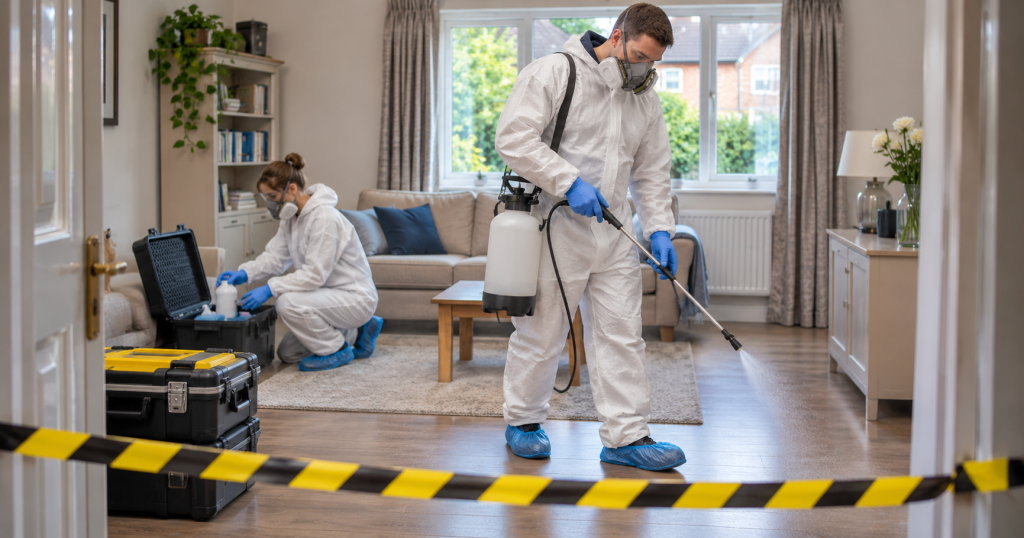
- Containment and PPE. The area is sealed off to stop contamination spreading, and the team put on suitable protective equipment.
- Removal of affected materials. Anything that can’t be safely decontaminated, such as soaked carpet or a mattress, is removed.
- Cleaning and decontamination. Surfaces are cleaned and then disinfected with appropriate products, working from the least to the most contaminated areas.
- Waste handling. Waste is classified, packaged and taken away by a registered waste carrier to a licensed facility.
- Odour treatment. Where needed, lingering odours are treated at the source, not just masked.
- Completion. You receive a completion report confirming what was done.
Who pays for trauma cleaning?
It depends on the property and the circumstances:
- Homeowners: some home insurance policies cover trauma cleaning, so check your policy or call your insurer before work starts.
- Rented homes: the landlord or letting agent is often responsible for the property, so involve them early.
- Council or housing association homes: the housing provider will usually have a process and may appoint the contractor.
- Commercial premises and vehicles: usually the business, its insurer or the fleet owner.
Whoever signs the contract with the cleaning company is normally the one responsible for paying, so be clear about this before work starts.
How much does trauma cleaning cost in the UK?
Prices vary with the size of the area, how long the fluids have been there, the materials affected and how much has to be removed. As a guide only:
| Type of job | Typical range |
|---|---|
| One room, limited contamination, nothing has soaked through to floors or walls | £700 – £900 |
| Advanced decomposition or heavy trauma, often several areas or structural materials | £2,500 – £7,000+ |
These figures are illustrative. Always ask for a written quote, and ask what happens if more contamination is found once work starts.
How to choose a trauma cleaning company
Price matters, but it shouldn’t be the only thing you compare. Ask:
- What biohazard training have your technicians completed, and is it practically assessed?
- Do you have public liability insurance that covers this work?
- Are you, or your waste contractor, a registered waste carrier?
- What’s included in the quote, and what would count as extra work?
- Will I get a completion report?
A professional company will be happy to answer all of these. If you want to understand what good training looks like, read why biohazard cleaning competence matters.
Find a trained specialist near you
The Sync Directory lists cleaning companies across the UK whose teams have completed Sync’s biohazard training. It’s a quick way to find someone local who has been trained to do the job properly.
About the author
Janet Nash is the founder of Sync Training Solutions. She founded her own cleaning company in 2011, began specialist biohazard work in 2016 and later sold the business. She now trains and coaches cleaning companies across the UK to deliver biohazard services safely and professionally.
FAQs
Is trauma cleaning the same as crime scene cleaning?
Crime scene cleaning is one type of trauma cleaning. Trauma cleaning also covers accidents, injuries, deaths and other incidents involving blood or bodily fluids.
Can I clean up blood myself?
For a small spill on a hard surface, possibly, with the right gloves and disinfectant. If blood has soaked into soft furnishings or flooring, or there’s a lot of it, call a specialist because of the infection risk.
Does home insurance cover trauma cleaning?
Some policies do. Check your policy wording or call your insurer before work starts.
How long does a trauma clean take?
Smaller jobs can often be done in a day. Larger or more severe jobs can take several days, especially if flooring or plasterboard has to be removed.
What happens to the waste?
It’s classified, packaged and collected by a registered waste carrier for disposal at a licensed facility.
This guide is general information, not legal or medical advice. For official guidance, see the HSE’s pages on bloodborne viruses and COSHH.
Are you a cleaning business owner? Trauma cleaning is a specialist service in growing demand. Find out how to add it to your business safely with our biohazard cleaning training. For what happens after a death at home, read our guide to unattended death cleaning.